The problem: reflection needs a starting point
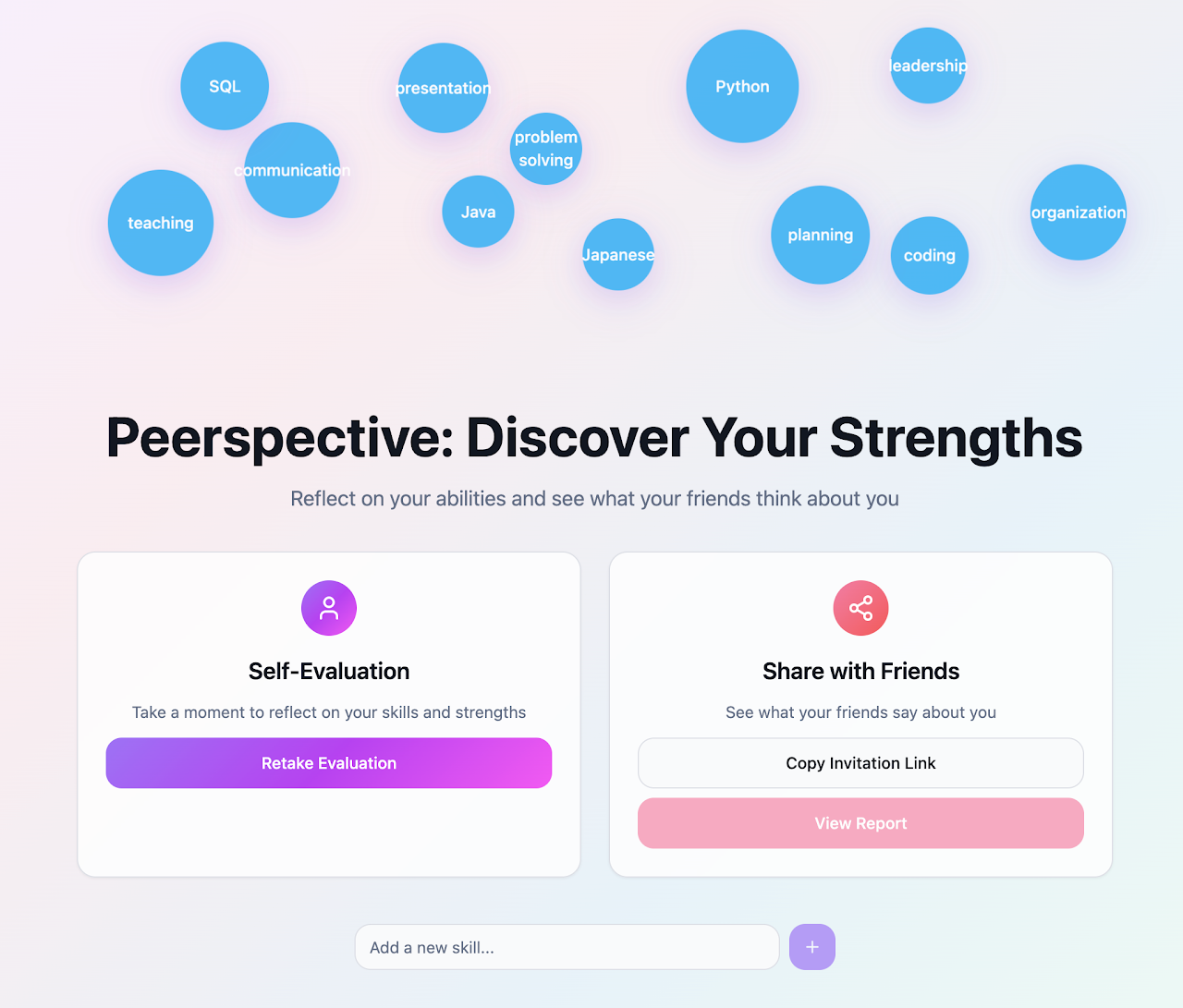
People do not always find it easy to name their strengths. Their friends may notice qualities they overlook, but collecting those impressions in a comparable form is difficult. Peerspective puts self-description and peer feedback side by side.
My role
I led product definition, interaction design, prototyping, and testing. The central design problem was how to make it easier for users to express their perceptions without flattening those perceptions into a personality score.
The interaction decision
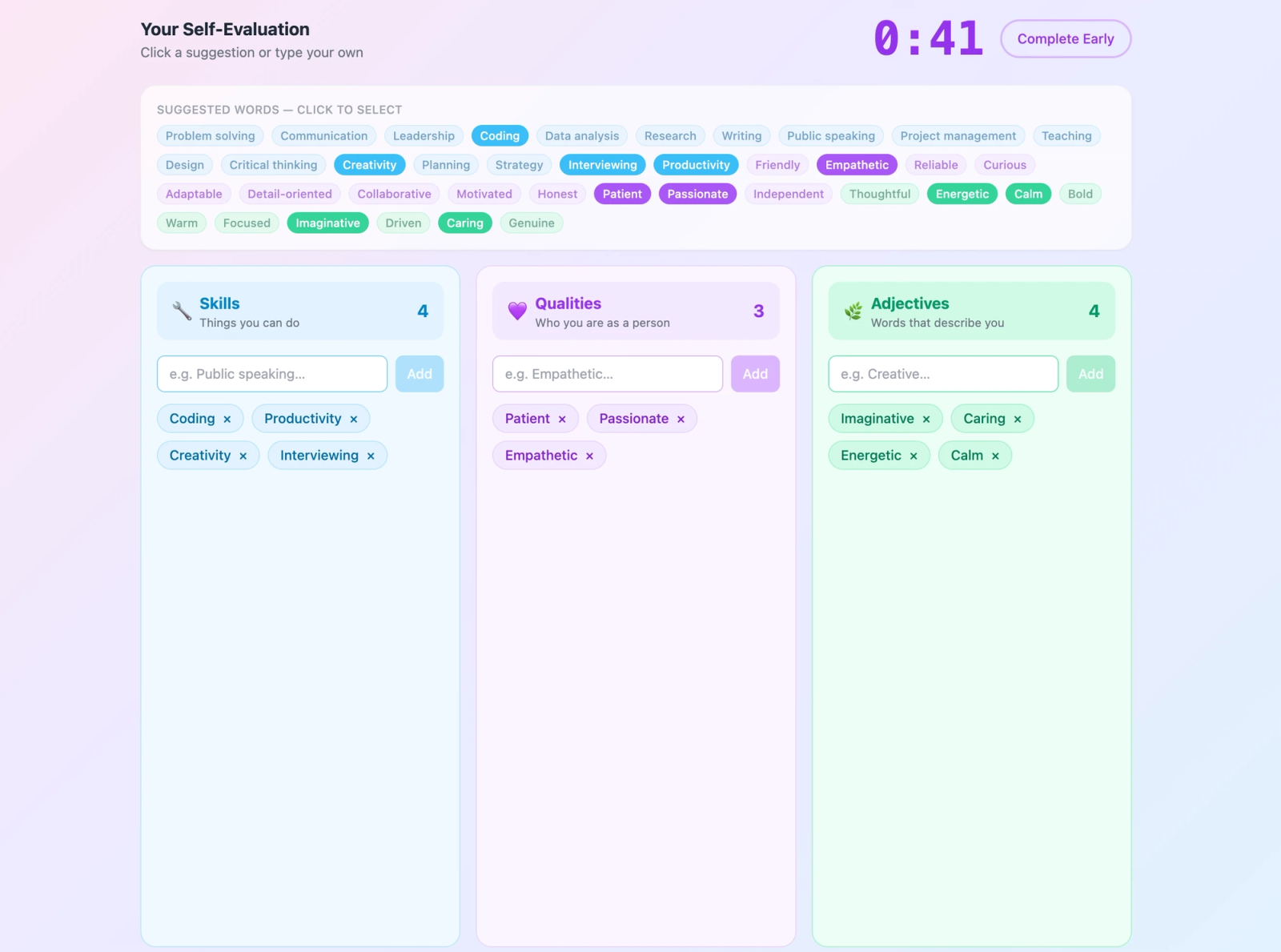
I compared open responses, questionnaire-like prompts, and multi-select input. Early iterations moved from open-ended questions to keywords, then to selectable descriptors with optional custom input when people still struggled to generate descriptions.
A shared vocabulary makes self and peer responses easier to compare. Optional custom words leave room for an observation the word bank does not capture.
What the testing showed
There were three rounds of testing with six participants per round. Multi-select recorded 20% more skill entries than free response. This measures the amount of input captured, not the accuracy of a person's strengths or a validated personality diagnosis.
The insight
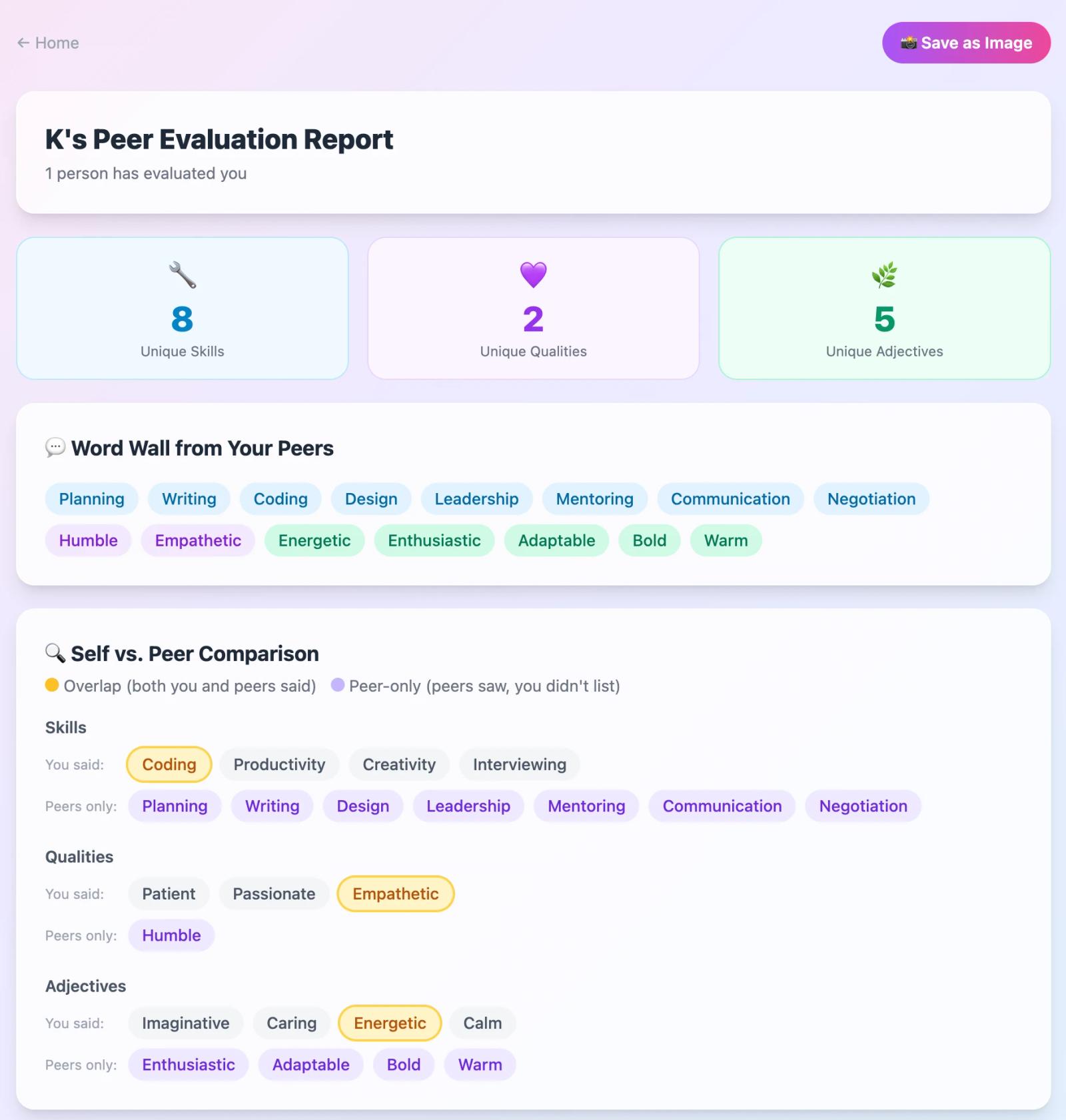
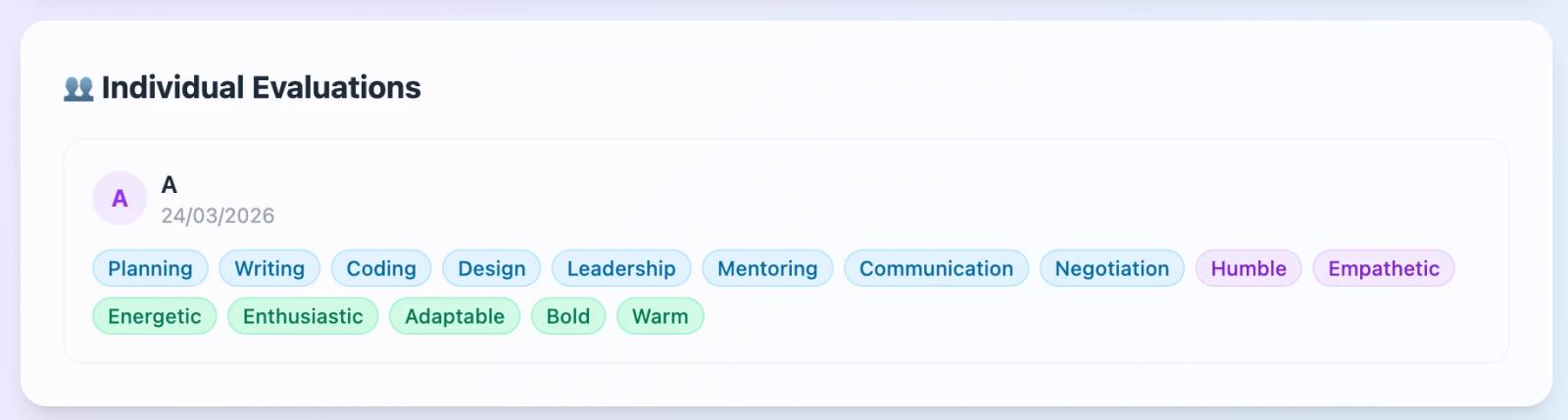
The gap between self-perception and peer perception is useful material for reflection. The interface helps users notice that gap and interpret it for themselves.
Current status
The prototype and three rounds of interaction testing are complete. The live project link and interface images show the resulting design.
Project materials